
Inert Gas Fire Suppression System Services
State Fire designs, installs, and services inert gas fire suppression systems that provide clean, reliable fire protection for sensitive environments and mission-critical facilities. Using naturally occurring gases such as nitrogen, argon, and carbon dioxide, these systems suppress fires without leaving residue or damaging valuable equipment.
Inert gas systems are ideal for data centers, telecommunications facilities, archives, medical imaging rooms, and other spaces where water-based systems may cause costly damage or downtime.
Clean, Reliable Fire Protection for Mission-Critical Spaces
State Fire designs, installs, inspects, maintains, and repairs inert gas fire suppression systems for facilities where water, foam, or dry chemical agents could damage sensitive equipment, interrupt operations, or create costly cleanup.
Inert gas systems use naturally occurring gases such as nitrogen, argon, or inert gas blends to suppress fires without leaving residue behind. These systems are ideal for data centers, server rooms, telecommunications facilities, archives, healthcare spaces, control rooms, and other mission-critical environments where uptime and asset protection matter.
State Fire helps commercial and industrial facilities protect high-value spaces with clean, code-compliant suppression solutions designed around the hazard, enclosure, occupancy, equipment, and operational needs of the facility.
What Is an Inert Gas Fire Suppression System?
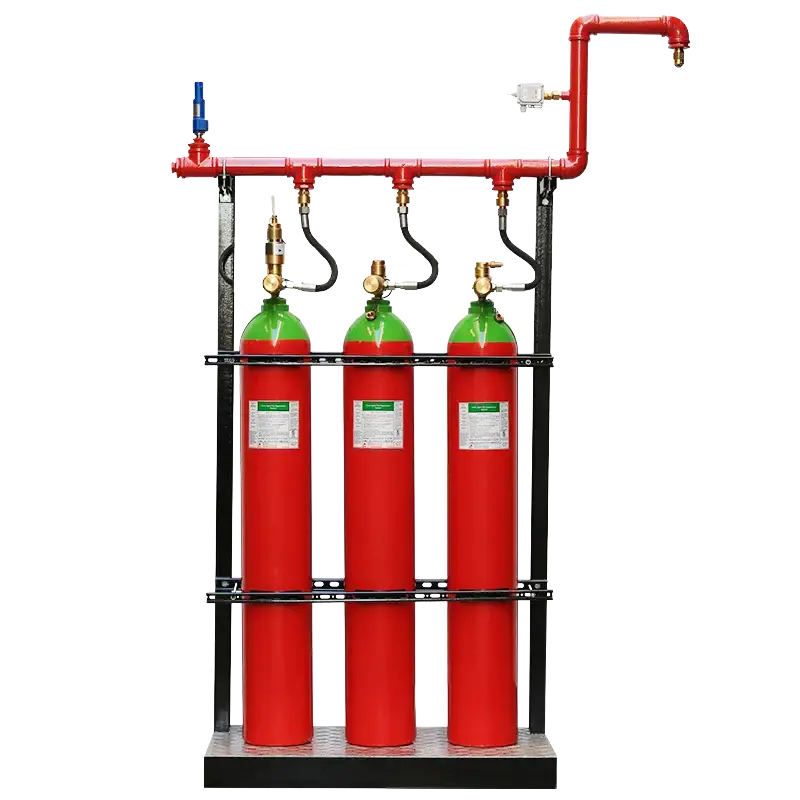
An inert gas fire suppression system extinguishes fire by reducing the oxygen concentration in a protected space below the level needed to sustain combustion. Instead of cooling the fire with water or coating equipment with chemical residue, the system floods the enclosure with a clean, electrically non-conductive gas.
When properly designed, inert gas suppression systems can protect sensitive environments while maintaining safe conditions for occupied spaces. These systems are commonly used where traditional sprinklers may create additional damage or where downtime must be minimized after a fire event.
Inert gas systems are:
- Residue-free
- Electrically non-conductive
- Non-corrosive
- Environmentally responsible
- Effective for enclosed special hazard areas
- Well suited for sensitive electronics and critical assets
State Fire designs inert gas suppression systems to meet applicable NFPA standards, manufacturer specifications, and local authority requirements.
Types of Inert Gas Fire Suppression Systems
Different inert gas systems use different naturally occurring gases or gas blends depending on the protected space, hazard type, room volume, occupancy, system design, and manufacturer requirements.
Nitrogen, Argon, and Inert Gas Blends
Common inert gas suppression options include nitrogen-based systems, argon-based systems, and blended systems that may include gases such as nitrogen, argon, and carbon dioxide in engineered concentrations.
These systems may be identified by agent classifications such as IG-100, IG-01, IG-55, or IG-541, depending on the gas composition and system manufacturer. The right option depends on the application, room integrity, design concentration, cylinder storage requirements, and the facility’s fire protection goals.
ANSUL and Fike Inert Gas System Installation
State Fire installs inert gas fire suppression systems from trusted manufacturers, including ANSUL and Fike. These manufacturer affiliations help State Fire provide reliable, engineered solutions for facilities that require proven special hazard fire protection.
Whether your facility needs a new inert gas system, a retrofit, inspection, repair, recharge, or ongoing maintenance, State Fire can help ensure the system is properly designed, installed, documented, and maintained.
Types of Inert Gas Fire Suppression Systems
Different inert gas systems use different naturally occurring gases or gas blends depending on the protected space, hazard type, room volume, occupancy, system design, and manufacturer requirements.
Nitrogen, Argon, and Inert Gas Blends
Common inert gas suppression options include nitrogen-based systems, argon-based systems, and blended systems that may include gases such as nitrogen, argon, and carbon dioxide in engineered concentrations.
These systems may be identified by agent classifications such as IG-100, IG-01, IG-55, or IG-541, depending on the gas composition and system manufacturer. The right option depends on the application, room integrity, design concentration, cylinder storage requirements, and the facility’s fire protection goals.
ANSUL and Fike Inert Gas System Installation
State Fire installs inert gas fire suppression systems from trusted manufacturers, including ANSUL and Fike. These manufacturer affiliations help State Fire provide reliable, engineered solutions for facilities that require proven special hazard fire protection.
Whether your facility needs a new inert gas system, a retrofit, inspection, repair, recharge, or ongoing maintenance, State Fire can help ensure the system is properly designed, installed, documented, and maintained.
Benefits of Inert Gas Fire Suppression
Inert gas systems offer fast, effective fire suppression while minimizing disruption to operations.
Residue-Free Protection
Inert gases leave no residue behind after discharge. That means less cleanup, reduced equipment impact, and a faster path to restoring operations after a fire event.
Safe for Sensitive Electronics
Because inert gases are electrically non-conductive, they are well suited for protecting servers, networking equipment, medical imaging equipment, control panels, broadcast systems, and other sensitive electronics.
Environmentally Responsible Fire Suppression
Inert gas systems use naturally occurring gases with zero ozone depletion potential. For facilities looking for a clean and environmentally responsible fire suppression solution, inert gas can be a strong option.
Designed for Occupied and Critical Environments
When properly engineered, inert gas systems can be used in occupied spaces while still providing effective fire suppression. System design must account for room size, occupancy, agent concentration, discharge timing, alarms, and life safety requirements.
Where Inert Gas Systems Are Used
State Fire installs and services inert gas fire suppression systems for a wide range of commercial, industrial, institutional, and mission-critical environments, including:

Data Centers and Server Rooms
Protect servers, storage systems, and mission-critical IT infrastructure from fire without the risk of water damage or residue.

Museums, Archives, and Libraries
Preserve irreplaceable books, historical documents, artwork, and cultural artifacts with clean fire protection that leaves no residue behind.

Telecommunications Facilities
Help maintain uninterrupted communication services by protecting switching equipment, network infrastructure, and telecommunications systems.

Medical Imaging Rooms and Healthcare Facilities
Protect MRI machines, CT scanners, diagnostic equipment, laboratories, and other sensitive healthcare technology while minimizing operational disruption.
IT Infrastructure and Network Rooms
Safeguard networking equipment, communication hardware, and business-critical technology with clean, residue-free fire suppression.
Laboratories and Cleanrooms
Provide clean fire suppression for research laboratories, pharmaceutical facilities, semiconductor manufacturing, and contamination-sensitive environments.
Financial Institutions and Trading Environments
Protect critical IT infrastructure, data processing equipment, vaults, and financial operations that require continuous uptime.
Broadcast and Media Facilities
Safeguard production studios, broadcast control rooms, audio/video equipment, and digital media infrastructure from fire-related damage.
Control Rooms and Command Centers
Help ensure continuous operation of industrial control systems, utility operations, security monitoring, and emergency response centers.
Electrical Rooms and Switchgear Rooms
Protect electrical distribution equipment, switchgear, UPS systems, and power control rooms without damaging sensitive electrical components.
Government and Defense Facilities
Secure mission-critical operations, communication systems, and sensitive government infrastructure with reliable special hazards fire suppression.
Manufacturing and Industrial Spaces
Protect automated production equipment, control systems, clean manufacturing processes, and other high-value industrial assets.
Aviation and Transportation Facilities
Safeguard aircraft maintenance facilities, avionics equipment, transportation control systems, and other critical infrastructure.
Corporate Facilities with Critical Business Operations
Protect executive offices, enterprise data rooms, business continuity centers, and mission-critical corporate operations from fire-related interruptions.
Hazard Analysis & Engineered System Design
Choosing the right inert gas fire suppression system starts with understanding the hazard. State Fire evaluates the protected space, equipment, occupancy, fire risk, room construction, ventilation, code requirements, and operational priorities before recommending a system design.
A proper inert gas system design may account for:
- Hazard type and fuel load
- Room size and enclosure volume
- Occupancy and life safety requirements
- Required design concentration
- Cylinder quantity and storage location
- Piping layout and nozzle placement
- Pressure relief and venting needs
- HVAC shutdown and damper coordination
- Fire alarm and detection integration
- Inspection, testing, and maintenance access
- AHJ and local code requirements
This engineering-focused approach helps ensure the system is designed to perform when needed and remain compliant over time.
Room Integrity, Detection & System Integration
Inert gas systems depend on the protected enclosure maintaining the correct concentration long enough to suppress the fire and prevent re-ignition. That makes room integrity a critical part of the design and maintenance process.
State Fire can help evaluate room integrity considerations such as door gaps, wall penetrations, cable openings, ductwork, dampers, raised floors, ceiling spaces, and other leakage points that may affect system performance.
Inert gas fire suppression systems are also commonly integrated with:
- Smoke and heat detection
- Releasing control panels
- Fire alarm systems
- Notification appliances
- Abort and manual release stations
- HVAC shutdown controls
- Building monitoring systems
- Supervisory and trouble signals
Proper integration helps ensure the system detects the hazard, alerts occupants, releases correctly, and communicates system status to the appropriate personnel or monitoring provider.
When to Choose Inert Gas Fire Suppression
Inert gas fire suppression may be the right choice when your facility needs clean, residue-free protection for sensitive or high-value environments.
Inert gas systems are often considered when:
- Water damage could be costly or unacceptable
- Equipment must remain protected from residue or corrosion
- Downtime must be minimized
- The space contains sensitive electronics or irreplaceable assets
- Environmental impact is a key consideration
- The hazard is located in an enclosed room or protected area
- A clean special hazard suppression system is required
State Fire can help compare inert gas systems against other fire protection options, including clean agent systems, CO2 systems, pre-action sprinklers, water mist systems, foam systems, and dry chemical suppression.
Protect Critical Assets with State Fire
Your critical spaces need more than a standard fire protection approach. State Fire provides engineered inert gas fire suppression solutions designed to protect people, equipment, property, and business continuity.
From system selection and installation to inspection, maintenance, repair, and retrofit support, State Fire delivers full-lifecycle inert gas fire suppression service for commercial and industrial facilities.
Contact State Fire today to schedule an inert gas fire suppression consultation.
Frequently Asked Questions
What is an inert gas fire suppression system?
An inert gas fire suppression system uses gases such as nitrogen, argon, or inert gas blends to reduce oxygen concentration and suppress fire without leaving residue. These systems are commonly used in sensitive spaces where water or dry chemical agents may not be preferred.
Where are inert gas systems commonly used?
Inert gas systems are commonly used in data centers, server rooms, telecommunications facilities, archives, museums, healthcare environments, control rooms, electrical rooms, laboratories, and other mission-critical spaces.
Are inert gas systems safe for electronics?
Yes. Inert gas systems are electrically non-conductive and leave no residue, making them well suited for servers, networking equipment, control systems, medical imaging equipment, archives, and other sensitive assets.
Are inert gas systems safe for occupied spaces?
When properly designed and installed, many inert gas systems can be used in occupied spaces. The system must be engineered around the room volume, agent concentration, discharge timing, alarms, and applicable life safety requirements.
Does State Fire install ANSUL and Fike inert gas systems?
Yes. State Fire installs fire suppression products from trusted manufacturers including ANSUL and Fike. Our team can support inert gas system installation, inspection, maintenance, repair, recharge, and retrofit needs.
Does State Fire inspect and maintain inert gas fire suppression systems?
Yes. State Fire provides inert gas fire suppression system inspections, testing, maintenance, troubleshooting, repairs, recharge support, and upgrades for commercial and industrial facilities.