
Commercial Fire Alarm Systems
State Fire designs, installs, inspects, repairs, upgrades, and monitors commercial fire alarm systems for businesses, industrial facilities, campuses, multi-tenant properties, and high-risk environments across our service areas.
Our certified fire alarm technicians provide NFPA 72-compliant solutions that help detect fires early, alert occupants quickly, notify emergency responders, and protect people, property, equipment, and business operations.
From new construction fire alarm installation to annual inspections, emergency repairs, system modernization, and 24/7 fire alarm monitoring, State Fire delivers full-lifecycle fire alarm support through regional offices with local code knowledge and responsive service.
Fire Alarm System Design & Engineering
Reliable fire detection starts with proper design. State Fire’s in-house design and engineering team creates custom fire alarm system layouts based on your building type, occupancy, square footage, equipment needs, and authority having jurisdiction (AHJ) requirements.
Our design team helps streamline permitting, reduce change orders, and support code-compliant installation from the start.
Design services include:
- Custom fire alarm system design and engineering
- Fire alarm drawings, floor plans, and as-built documentation
- Device layout, spacing, and placement per NFPA 72
- Fire alarm control panel planning
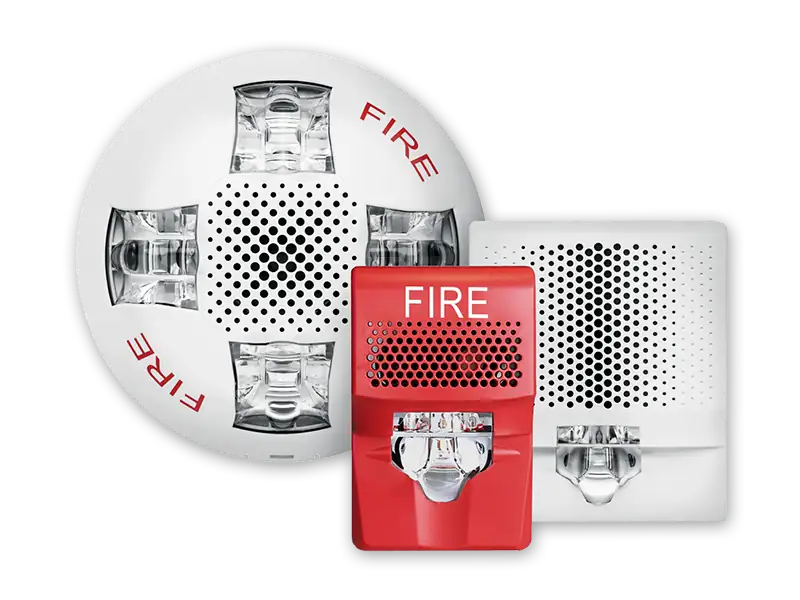
- Notification appliance layout for horns, strobes, and speakers
- Integration planning for sprinkler systems, suppression systems, HVAC shutdown, elevator recall, and monitoring
- Value engineering to control project cost without sacrificing compliance
- Plan review support for AHJs, contractors, and facility teams
Fire Alarm Installation Services
State Fire installs complete commercial fire alarm systems for new construction, tenant improvements, retrofits, facility expansions, and system replacements. Every installation is completed by trained technicians and tested before final sign-off.
We install and service:
- Addressable fire alarm systems
- Conventional fire alarm systems
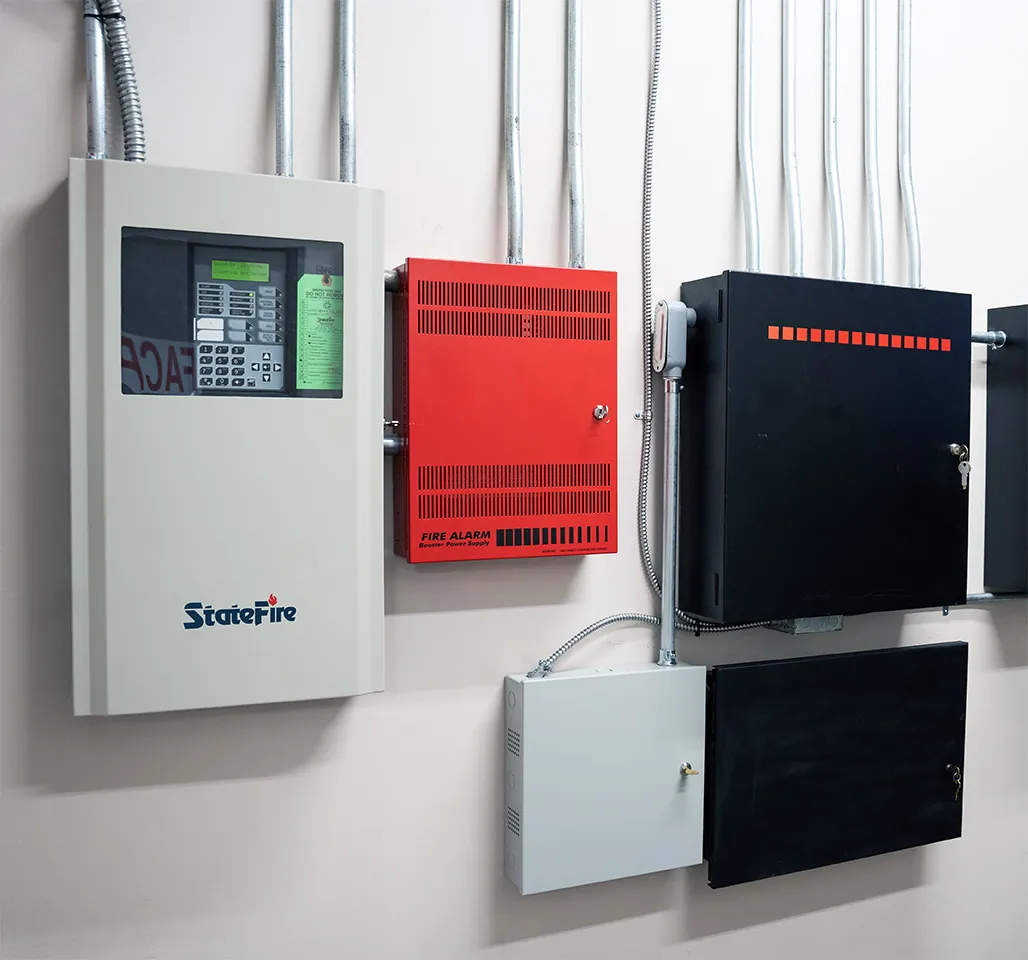
- Fire alarm control panels
- Smoke detectors, heat detectors, and duct detectors
- Manual pull stations
- Horn/strobes, speaker/strobes, and visual notification appliances
- Voice evacuation and emergency communication systems
- Mass notification systems
- Elevator recall integration
- Sprinkler waterflow and tamper switch monitoring
- Cellular, IP, and dual-path fire alarm communicators
Addressable, Conventional & Integrated Fire Alarm Systems
Not every building needs the same type of fire alarm system. State Fire helps determine the right system based on building size, occupancy, code requirements, budget, and future expansion needs.
Addressable fire alarm systems identify each individual device, making them ideal for larger facilities, campuses, healthcare buildings, schools, warehouses, and complex commercial properties.
Conventional fire alarm systems group devices by zone and can be a practical option for smaller buildings with simpler layouts.
Integrated fire alarm systems connect with sprinkler systems, elevators, HVAC equipment, access control, suppression systems, emergency communication systems, and supervising station monitoring to support a complete life safety strategy.
When Is a Commercial Fire Alarm System Required?
Commercial fire alarm requirements depend on your building occupancy, use, size, local fire code, and AHJ requirements. A system may be required for new construction, tenant improvements, occupancy changes, renovations, high-occupancy spaces, multifamily buildings, schools, healthcare facilities, industrial properties, warehouses, and buildings with sprinkler or suppression system monitoring needs.
Fire alarm systems may also be required by insurance providers, property managers, corporate safety standards, or local fire departments.
State Fire helps building owners, contractors, facility managers, and property teams understand fire alarm requirements and choose systems designed for code compliance, occupant safety, and long-term reliability.
Fire Alarm Inspection, Testing & Maintenance
Routine fire alarm inspection and testing helps verify system performance, maintain NFPA 72 compliance, and provide documentation for AHJs, insurance providers, property managers, and facility records.
State Fire provides complete fire alarm inspection, testing, and maintenance services to help keep your system operational and audit-ready.
Inspection and testing services include:
- Annual fire alarm inspections per NFPA 72
- Functional testing of initiating devices and notification appliances
- Fire alarm control panel diagnostics
- Event log and trouble signal review
- Battery load testing and backup power verification
- Smoke detector sensitivity testing
- Waterflow and tamper switch testing
- Monitoring signal transmission testing
- Visual inspections of devices, panels, and communication equipment
- Detailed inspection reports for AHJs, insurance, and facility documentation
- Deficiency repair quotes and follow-up service
NFPA 72 Fire Alarm Inspection & Testing
NFPA 72 sets standards for fire alarm inspection, testing, monitoring, documentation, and maintenance. Many commercial systems require annual testing, while certain components may require quarterly, semi-annual, or more frequent checks depending on the system, device type, local code, and AHJ requirements.
State Fire helps facility teams stay on schedule with recurring fire alarm maintenance, inspection reporting, and repair support when deficiencies are found.
24/7 Fire Alarm Monitoring
When seconds count, reliable fire alarm monitoring helps ensure emergency responders are notified quickly. State Fire provides 24/7 fire alarm monitoring through a UL-listed central station using dependable communication paths designed for commercial fire protection systems.
Monitoring options include:
- Cellular fire alarm monitoring
- IP/internet-based alarm monitoring
- Traditional phone line monitoring where still supported
- Dual-path cellular and IP monitoring
- Sprinkler waterflow and tamper monitoring
- Supervisory, trouble, and alarm signal monitoring
- Monitoring for new and existing fire alarm systems
Fire Alarm System Upgrades & Repairs
Aging panels, obsolete parts, repeated trouble signals, code updates, and facility changes can all create a need for fire alarm repair or modernization. State Fire diagnoses fire alarm issues quickly and recommends the most practical path forward, whether that means repair, partial upgrade, or full system replacement.
Upgrade and repair services include:
- 24-hour emergency fire alarm repair
- Fire alarm troubleshooting
- Panel replacement and modernization
- Conventional-to-addressable system conversions
- Device replacement, relocation, and expansion
- Fire alarm communicator upgrades
- Trouble and supervisory signal repair
- Code compliance upgrades
- System repairs after remodels, tenant improvements, or failed inspections
Advanced Fire Detection & Life Safety Integration
Some facilities require more than standard smoke and heat detection. State Fire supports advanced fire detection and integrated life safety systems for complex commercial, industrial, and mission-critical environments.
Advanced options may include:
- Air-sampling smoke detection
- Early warning smoke detection
- Duct smoke detection
- Carbon monoxide detection
- Gas detection integration
- Voice evacuation systems
- Mass notification systems
- Elevator recall
- HVAC shutdown
- Access control release
- Sprinkler waterflow and tamper monitoring
- Clean agent or special hazard suppression releasing panels
- Integrated fire alarm and emergency communication systems
Facilities We Protect
State Fire designs, installs, inspects, repairs, and monitors fire alarm systems for a wide range of commercial and industrial properties, including:
- Commercial office buildings
- Manufacturing plants
- Warehouses and distribution centers
- Schools, universities, and educational facilities
- Hospitals, clinics, and healthcare facilities
- Multi-tenant residential buildings
- Mixed-use developments
- Retail centers and shopping malls
- Government and municipal buildings
- Hotels and hospitality properties
- Industrial facilities
- Data centers and technology facilities
- Large campuses and multi-building properties
Why Choose State Fire for Fire Alarm Systems?
State Fire provides complete fire alarm system support from design through long-term maintenance. Our team combines technical fire protection knowledge, regional service coverage, and practical field experience to help keep your facility protected and compliant.
Why businesses choose State Fire:
- NICET-certified technicians on every job
- In-house design and engineering team
- NFPA 72-compliant inspections and reporting
- 24-hour emergency repair service
- UL-listed central station monitoring
- Full lifecycle support: design, installation, inspection, monitoring, repair, and upgrades
- Experience with commercial, industrial, institutional, and multi-site facilities
- Integration with sprinkler, suppression, HVAC, elevator, and life safety systems
- Manufacturer partnerships with Edwards, Fike, Silent Knight, Honeywell, Potter, and Vigilant
Our Fire Alarm Industry Affiliations
State Fire partners with leading fire alarm manufacturers to deliver reliable, high-performance life safety systems for commercial and industrial facilities. Manufacturer partners include:




Locate a Fire Alarm Office Near You
Need commercial fire alarm service near you? State Fire provides fire alarm installation, inspection, testing, monitoring, maintenance, upgrades, and repair through regional offices across our service areas.
Contact your nearest State Fire location to schedule service, request a consultation, or get help with an upcoming fire alarm project.
Fire Alarm System FAQs
What does a commercial fire alarm system include?
A complete commercial fire alarm system typically includes a fire alarm control panel, initiating devices such as smoke detectors, heat detectors, duct detectors, and manual pull stations, notification appliances such as horns, strobes, and speakers, backup power, and a communication path to a supervising station when monitoring is required.
How often do commercial fire alarm systems need to be inspected?
Most commercial fire alarm systems require annual inspection and testing under NFPA 72, with some components requiring quarterly, semi-annual, or more frequent checks depending on the system type, device type, local code, and AHJ requirements.
When is a fire alarm system required in a commercial building?
A fire alarm system may be required based on building occupancy, square footage, use, occupant load, local fire code, insurance requirements, or AHJ direction. New construction, tenant improvements, occupancy changes, healthcare facilities, schools, multifamily buildings, industrial properties, and high-occupancy spaces commonly require fire alarm review.
What’s the difference between addressable and conventional fire alarm systems?
Conventional fire alarm systems group devices by zone, while addressable systems identify each individual device. Addressable systems are typically preferred for larger or more complex facilities because they help speed emergency response, simplify troubleshooting, and provide more detailed system information.
Do you offer 24/7 fire alarm monitoring?
Yes. State Fire provides 24/7 fire alarm monitoring through a UL-listed central station using cellular, IP, and dual-path communicators to help meet NFPA 72 supervising station requirements.
Can an existing fire alarm system be upgraded instead of replaced?
In many cases, yes. State Fire can evaluate your current fire alarm system and recommend repair, panel replacement, device upgrades, communicator upgrades, or conventional-to-addressable conversion when a full replacement is not necessary.
Need Fire Alarm Installation, Inspection, or Monitoring?
State Fire provides complete commercial fire alarm system support, including design, installation, inspection, testing, maintenance, repair, upgrades, and 24/7 monitoring.
Whether you need a new fire alarm system, an NFPA 72 inspection, emergency repair, or monitoring for an existing panel, our team can help keep your facility protected and compliant.