Commercial Kitchen Fire Suppression Systems
Commercial kitchens are some of the highest-risk fire environments in any building. Grease buildup, open flames, high-temperature appliances, cooking oils, and nonstop ignition sources can turn a small flare-up into a full kitchen fire in seconds. A properly designed and maintained fire suppression system is one of the most important life safety systems standing between that risk and your kitchen, your staff, and your business.
State Fire installs, inspects, services, repairs, and recharges UL 300-listed commercial kitchen fire suppression systems for restaurants, hotels, cafeterias, food service facilities, and commercial cooking operations. Our certified technicians help protect your people, property, equipment, and revenue — with system installation, semi-annual inspections, Class K extinguisher service, emergency recharge, and NFPA 96/17A compliance support, backed by 24/7 emergency response.
Complete Commercial Kitchen Fire Protection Services
State Fire supports every major fire safety requirement for commercial kitchens, from new construction and tenant improvements to ongoing inspections, maintenance, repair, and documentation.
Our restaurant fire protection services include:
- Commercial kitchen fire suppression system installation, inspection, maintenance, repair, and recharge
- NFPA 17A semi-annual kitchen suppression system inspections
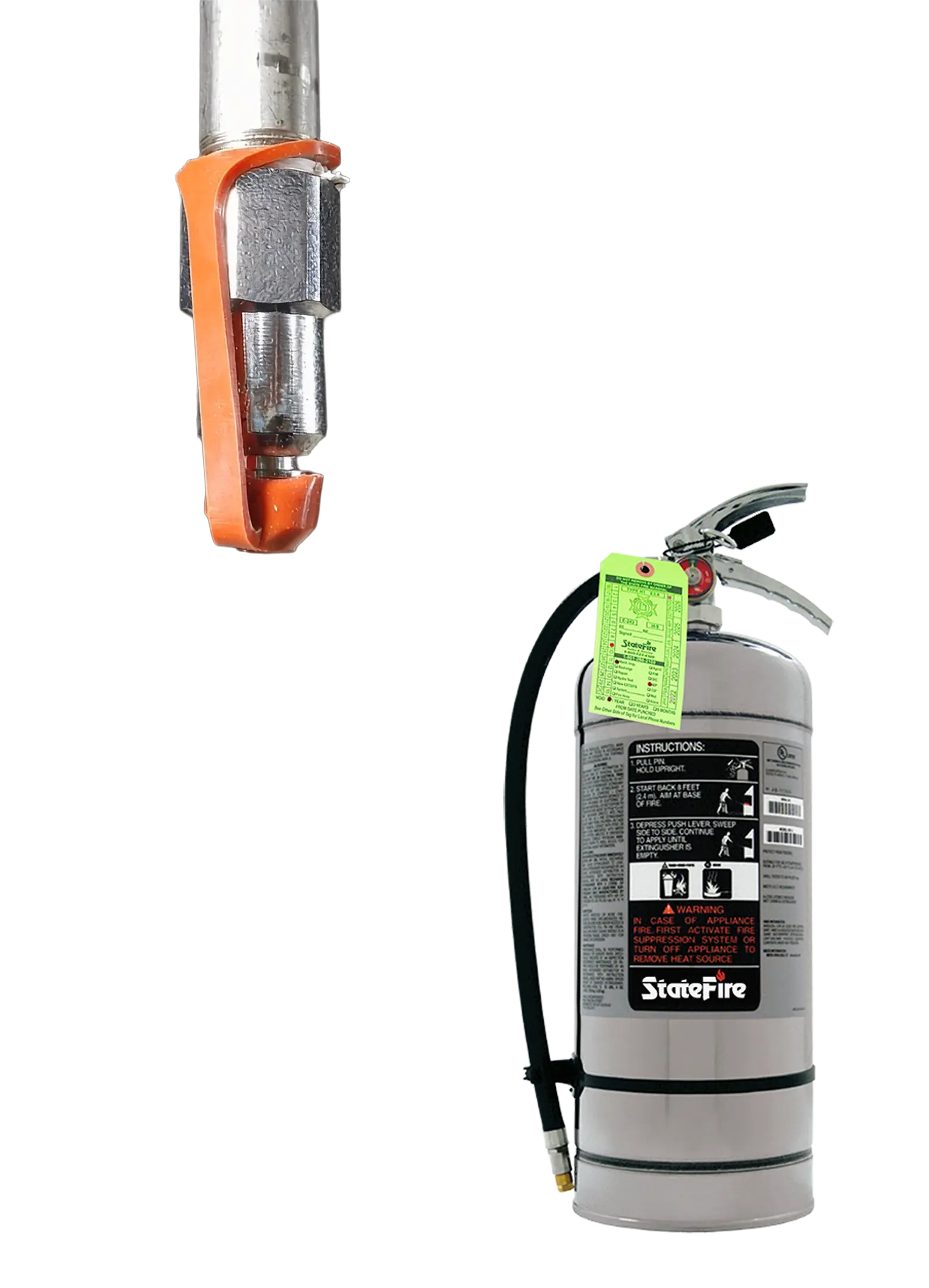
- Class K fire extinguisher sales, inspection, recharge, and placement support
- Emergency suppression system repair, reset, and recharge after activation
- Fire code violation correction and failed inspection support
- Pre-inspection support for AHJ, health department, and insurance audits
- New construction, remodel, and tenant improvement system design
- Multi-location restaurant fire protection coordination
Every service is performed with attention to applicable NFPA standards, local fire code requirements, manufacturer specifications, and the authority having jurisdiction.
Kitchen Suppression System Installation
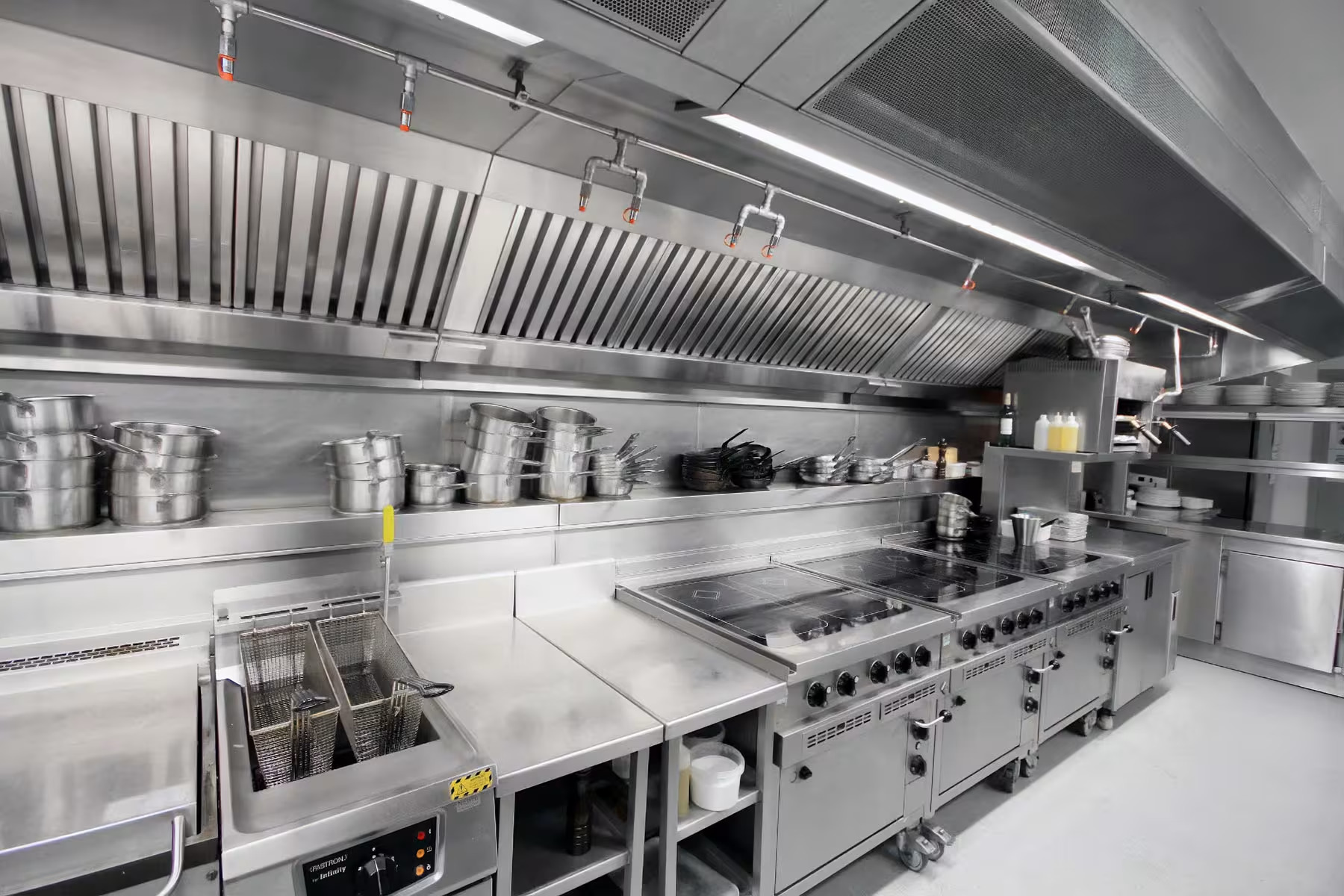
Opening a new restaurant, replacing an outdated system, or reconfiguring your cooking line? State Fire designs and installs commercial kitchen fire suppression systems based on your actual appliances, hood layout, duct configuration, fuel sources, and local code requirements.
Our installation services include:
- Cooking line evaluation and hazard analysis
- Suppression system design with appliance-specific nozzle placement
- UL 300-listed wet chemical system installation
- Permit coordination and AHJ submittal support
- Tank, piping, detection link, and nozzle installation
- Manual pull station setup
- Automatic gas, fuel, and electrical shutoff integration
- System charging, activation testing, and final verification
- Inspection documentation and certification
We install systems for fryers, ranges, griddles, charbroilers, woks, ovens, tilt skillets, hood plenums, ducts, and other commercial cooking hazards.
Inspection & Testing
Commercial kitchen fire suppression systems need regular professional inspection to confirm that every component is ready to operate when needed. State Fire technicians inspect and test systems according to applicable NFPA 17A, NFPA 96, manufacturer, AHJ, and insurance documentation requirements.
Depending on your system type and configuration, inspection may include:
- Nozzles, nozzle caps, and coverage alignment with current equipment
- Fusible links or detection component condition and dates
- Manual pull station and control head testing
- Cylinder pressure, weight, and wet chemical agent level
- Piping, fittings, and corrosion checks
- Gas valve, microswitch, and electrical shutoff verification
- Fuel source interlock and appliance coverage review
- Tamper seal and service tag replacement
- Recent appliance changes or cooking line modifications
- Deficiencies requiring repair or replacement
If your cooking equipment has changed since the system was designed, your suppression coverage may need to be reviewed to make sure it still protects the correct hazards. We provide a written inspection report and AHJ-ready documentation after every visit.
Maintenance, Recharge & 24/7 Emergency Service
When a kitchen suppression system activates, your cooking operation is offline until the system is inspected, recharged, reset, and cleared for service by a qualified technician. State Fire provides responsive emergency service for system activations, accidental discharges, failed components, and urgent repair needs.
Emergency and maintenance services include:
- Post-activation/post-discharge inspection
- Cylinder recharge or replacement
- Fusible link replacement
- Nozzle cleaning, replacement, or realignment
- Detection component and pull station repair
- Gas valve and electrical shutoff troubleshooting
- Hydrostatic testing support when required
- Pre-inspection remediation before AHJ visits
- Coordination with Class K extinguisher service
- Complete system reset and service documentation
Our goal is simple: restore protection, satisfy code requirements, and get your kitchen back online as quickly as possible.
How Commercial Kitchen Fire Suppression Systems Work
Commercial kitchen fire suppression systems are designed to detect and suppress fires at the cooking source before flames spread into the hood, plenum, ductwork, or surrounding structure.
A typical kitchen hood fire suppression system includes:
- Heat detection or fusible links that activate when temperatures rise above a set threshold
- Wet chemical agent cylinders that store the fire suppression agent
- Appliance, plenum, and duct nozzles positioned to cover cooking hazards
- A manual pull station for emergency activation by staff
- Automatic fuel and electrical shutoffs to stop gas or power feeding the fire
- System piping and control components that distribute agent to the protected areas
- Class K fire extinguishers as required backup protection for kitchen staff
When activated, the system discharges wet chemical agent across the protected cooking surfaces — cooling the grease, suppressing flames, and forming a vapor-securing layer that reduces the risk of re-ignition.

NFPA 96, NFPA 17A & UL-300 Compliance
Commercial kitchens that produce grease-laden vapors are typically required to maintain an approved automatic fire suppression system over cooking equipment. State Fire helps commercial kitchens maintain compliance with:
- NFPA 96 ventilation control and fire protection for commercial cooking operations
- NFPA 17A wet chemical extinguishing system inspection and maintenance
- NFPA 10 portable fire extinguisher requirements, including Class K extinguishers
- UL 300-listed system standards
- Local fire marshal and AHJ requirements
- Insurance carrier documentation requests
- Manufacturer inspection and maintenance guidelines
Typical compliance requirements include semi-annual suppression inspections, Class K extinguisher availability, documented service records, proper nozzle coverage, working fuel shutoffs, and clear service tags. Failure to maintain your system can lead to failed inspections, reinspection fees, fines, forced kitchen closure, increased insurance scrutiny, or claim complications after a fire.
Service Documentation
A commercial kitchen may be required to show proof of recent suppression inspection, extinguisher service, and deficiency correction during fire marshal, health department, insurance, or property management reviews.
State Fire provides service documentation that may include:
- Written service and inspection reports
- Deficiency lists and repair recommendations
- Certificates of service
- Service tags and stickers
- Documentation for AHJ and insurance records
This keeps your kitchen ready for inspections and gives owners, operators, and facility managers a clear record of completed fire protection work.
When to Upgrade an Older Kitchen Suppression System
Older kitchen suppression systems may not provide the coverage needed for today's high-temperature cooking equipment, modern vegetable oils, and energy-efficient appliances. You may need an upgrade or redesign if:
- Your system is not UL 300 listed, or is still an older dry chemical system
- You replaced, moved, or added cooking appliances
- Fryers, ranges, or charbroilers no longer align with nozzles
- The hood or duct configuration changed
- Your AHJ flagged coverage issues, or your insurer requested updated documentation
- The system has repeated deficiencies or obsolete parts
State Fire can evaluate your current system and recommend whether it needs adjustment, repair, recharge, redesign, or replacement.
What to Expect During a Kitchen Suppression Inspection
During a typical visit, our technician will:
- Review the cooking line, hood, duct, and appliance layout
- Verify nozzles are correctly positioned for current equipment
- Check detection links, cylinders, piping, pull station, and controls
- Test fuel and electrical shutoff functionality as applicable
- Identify deficiencies or components that need repair
- Replace service tags and seals as needed
- Provide a written report for your records, AHJ, or insurance carrier
To help your inspection go smoothly: schedule during off-hours when possible, let cooking equipment cool before the visit, clear pots and pans from the cooking line, keep access open to the hood, cylinders, pull station, and gas shutoff, and tell the technician about any appliance changes. Even moving an appliance a few inches can affect nozzle alignment — avoid moving equipment after service without calling State Fire first.
Failed Fire Inspection & Fire Code Violation Support
If your restaurant has received a fire code correction notice, a failed fire marshal inspection, or a suppression system deficiency, State Fire can help identify the issue and provide a path toward correction. We can help with:
- Failed fire inspection corrections and AHJ correction notices
- Missing or expired service tags
- Suppression system and Class K extinguisher deficiencies
- Emergency recharge requirements
- Reinspection documentation, repair quotes, and recommended timelines
We provide clear reporting and practical next steps so you can address deficiencies and get your kitchen back into compliance.
Restaurant Fire Protection Maintenance Plans
The easiest way to avoid last-minute compliance issues is to keep your kitchen on a scheduled maintenance plan. State Fire can coordinate recurring services so your inspections, extinguisher service, and documentation stay organized throughout the year, including:
- Semi-annual kitchen suppression system inspections
- Class K fire extinguisher inspections and recharge
- Deficiency tracking and repair recommendations
- Emergency repair and recharge support
- After-hours and overnight scheduling
- Multi-location service coordination
- Documentation for AHJ and insurance audits
Single-Site & Multi-Location Service
State Fire supports independent restaurants, franchise operators, hospitality groups, and multi-location food service facilities. For restaurant groups and chains, we help coordinate service schedules, documentation, deficiency tracking, and recurring inspections across multiple locations — especially helpful for operators managing mixed equipment types, different AHJ requirements, or locations across multiple service areas. Many services, including planned maintenance, can also be scheduled after-hours or overnight to help reduce disruption during normal operating hours.
Suppression Brands We Service
State Fire installs and services leading UL-300 listed commercial kitchen fire suppression systems, including:
- ANSUL R-102 — the most widely installed wet chemical system in commercial kitchens
- Amerex KP — kitchen protection systems for restaurant and institutional kitchens
- Kidde WHDR (Wet High-Density Restaurant) — restaurant suppression for compact and complex cooking lines
- Badger — wet chemical suppression for restaurant applications
- Buckeye — commercial kitchen suppression systems
- CaptiveAire CORE — integrated hood and suppression systems for new construction





Why Choose State Fire
- Certified kitchen fire suppression system installation and inspection technicians
- NFPA 96, NFPA 17A, and UL 300 compliance support
- 24/7 emergency response for system activations
- After-hours scheduling to reduce disruption
- Multi-location coordination for restaurant groups and chains
- Documentation for AHJ, insurance, and facility records
- Deficiency reporting with clear repair recommendations
- Local code knowledge through regional service teams
Commercial Kitchens & Food Service Facilities We Serve
- Restaurants, bars, and grills
- Hotels and resorts
- Cafeterias and food courts
- School and university dining facilities
- Healthcare and senior living kitchens
- Grocery store kitchens and commercial bakeries
- Commissary kitchens and ghost kitchens
- Corporate dining and industrial food service operations
- Multi-location restaurant groups and franchises
If your facility uses commercial cooking equipment that produces grease-laden vapors, State Fire can help you understand your fire protection requirements and service schedule.
Related Service: Restaurant Hood Cleaning
Grease buildup inside kitchen hoods and exhaust systems is one of the leading causes of restaurant fires, and hood cleaning is a separate but closely related requirement under NFPA 96. State Fire also provides restaurant hood cleaning, currently available in Utah.
Kitchen Fire Suppression Services Near You
State Fire provides commercial kitchen fire suppression service through regional offices with local code knowledge and responsive field technicians.
Commercial Kitchen Fire Suppression FAQs
Are commercial kitchen fire suppression systems required?
Many commercial kitchens are required to have an approved automatic fire suppression system installed over cooking equipment that produces grease-laden vapors. Requirements depend on the cooking equipment, occupancy type, local fire code, and authority having jurisdiction.
How often should commercial kitchen fire suppression systems be inspected?
Commercial kitchen fire suppression systems are commonly inspected by a qualified technician on a semi-annual schedule, in accordance with NFPA 17A and manufacturer requirements. Systems should also be inspected after activation, discharge, equipment changes, or suspected damage.
What happens after a kitchen fire suppression system activates?
The system must be inspected, fusible links replaced as needed, cylinders recharged or replaced, all components verified, and the system reset by a qualified technician before the kitchen returns to service.
What brands of kitchen fire suppression does State Fire service?
State Fire services many major commercial kitchen fire suppression systems, including ANSUL, Amerex, Kidde, Badger, Buckeye, CaptiveAire, and other recognized manufacturers.
Do I need to service my system if I move or replace cooking equipment?
Yes. Moving, replacing, or adding cooking equipment can affect nozzle coverage and system performance. A qualified technician should inspect and verify the system whenever the cooking line changes.
When should an older system be upgraded?
An upgrade may be recommended if the system isn't UL 300 listed, uses outdated technology, no longer matches your cooking equipment layout, has obsolete components, or no longer meets current NFPA or local fire code requirements.
Do I also need Class K fire extinguishers?
Many commercial kitchens need Class K wet chemical fire extinguishers near cooking equipment that uses combustible cooking media, such as vegetable oils and animal fats. Exact requirements depend on equipment type, placement, local code, and AHJ requirements.
What happens if a restaurant fails a fire inspection?
A failed inspection may result in a correction notice, required repairs, reinspection, fines, or operational restrictions depending on the severity of the issue and the AHJ. State Fire can help identify deficiencies, provide repair recommendations, complete service work, and provide documentation for reinspection.
How long does system installation take?
Most installations can be completed within one to three days depending on the cooking line, hood configuration, permitting requirements, and integration with gas and electrical shutoffs. New construction projects are scheduled around the full build timeline.
Does State Fire offer emergency kitchen suppression service?
Yes. State Fire provides 24/7 emergency service for system activations, accidental discharges, repairs, recharges, and post-activation inspections to help reduce downtime.
Contact State Fire
Need a checkup for your fire suppression system? Our team is certified to install and service a variety of fire protection systems.