
Mobile Fire Suppression Systems for Heavy Equipment & Vehicles
Mobile and heavy equipment operate in some of the harshest fire-risk environments — high heat, constant vibration, hydraulic pressure, fuel exposure, electrical loads, dust, debris, and remote jobsite conditions. A single fire in an engine compartment, hydraulic area, turbocharger zone, or battery compartment can put operators at risk, destroy valuable equipment, and create costly downtime.
State Fire designs, installs, inspects, maintains, recharges, and repairs mobile fire suppression systems for heavy equipment and vehicles used in mining, construction, forestry, transportation, industrial, agricultural, and specialty fleet operations. In Western Canada, these services are provided through Tomahawk Industries Ltd., a State Fire company.
Our technicians install automatic fire detection and suppression systems designed to detect fires quickly, discharge at the source, and help protect operators, equipment, productivity, and compliance.
Automatic Fire Suppression for Heavy Equipment & Vehicles
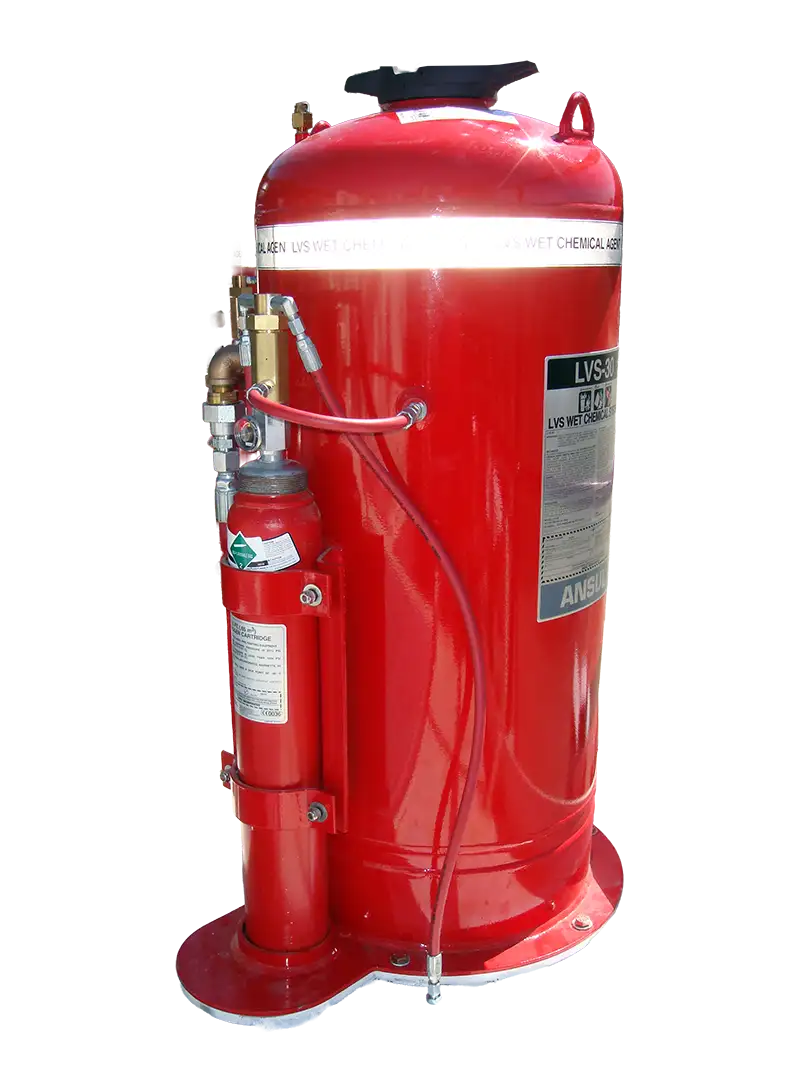
Mobile fire suppression systems are built to protect high-risk equipment where a traditional fire protection system is not practical. These systems use automatic detection, engineered nozzles, manual activation points, and suppression agents selected for the equipment’s specific fire hazards.
State Fire supports full-lifecycle service for vehicle fire suppression systems, including:
- System design and equipment hazard assessment
- New system installation
- Fire detection and activation setup
- Suppression agent selection
- Inspection and maintenance
- Post-discharge recharge and reset
- Repairs, upgrades, and retrofit support
- Compliance documentation for safety programs, mine sites, insurers, and audits
Whether you manage one machine or a multi-site fleet, State Fire helps keep critical equipment protected and ready to operate.
Heavy Equipment & Vehicle Applications We Protect
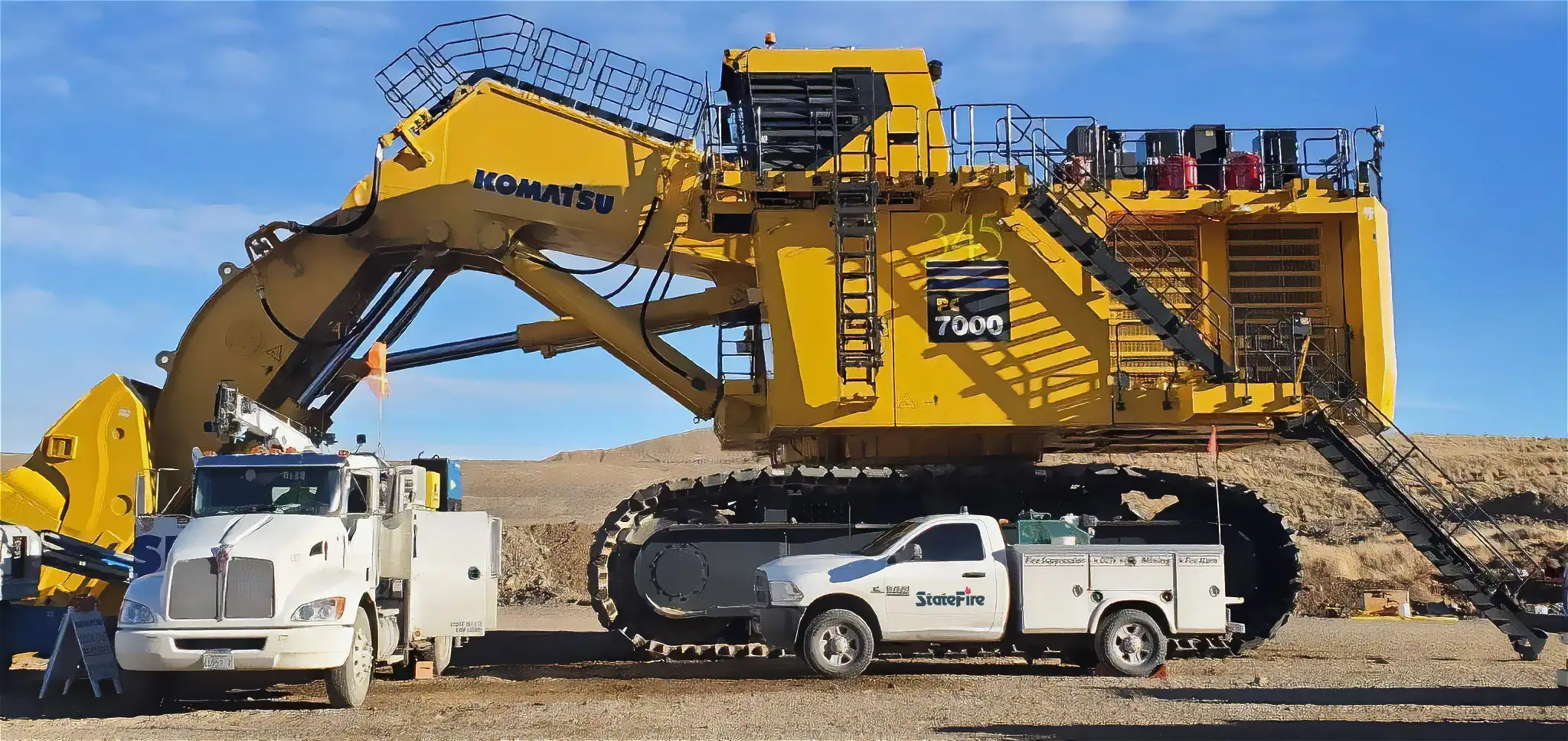
State Fire installs and services automatic fire suppression systems for a wide range of mobile, off-road, industrial, and specialty vehicle applications.
Mining Equipment Fire Suppression
Mining equipment operates around heat, dust, vibration, combustible fluids, and remote working conditions where response time can determine whether a small fire becomes a total equipment loss.
We protect:
- Mining haul trucks
- Articulated dump trucks
- Loaders and front-end loaders
- Draglines and rope shovels
- Electric and hydraulic shovels
- Drill rigs and blasthole drills
- Continuous miners and roof bolters
- LHDs, shuttle cars, and underground equipment
- Support vehicles and mine-site service equipment
State Fire installs and services systems designed to support applicable MSHA, NFPA, manufacturer, OEM, and site safety requirements.
Construction Equipment Fire Suppression
Construction equipment is exposed to high engine loads, hydraulic leaks, hot exhaust components, debris buildup, and long operating hours. Fire suppression helps protect operators, reduce downtime, and extend the life of high-value assets.
We protect:
- Excavators
- Bulldozers
- Motor graders
- Front-end loaders
- Skid steers and compact track loaders
- Backhoes and trenchers
- Pavers and compactors
- Construction haul trucks
- Cranes and specialty jobsite equipment
Forestry Equipment Fire Suppression
Forestry equipment often works in dry, combustible environments where a spark, hydraulic leak, or overheated component can quickly ignite surrounding material.
We protect:
- Forestry harvesters
- Feller bunchers
- Log loaders
- Forwarders
- Skidders
- Mulchers and brush cutters
- Chippers and grinders
- Tracked and wheeled forestry equipment
Fleet & Transportation Vehicle Fire Suppression
Vehicle fires can endanger drivers, passengers, cargo, and surrounding property. State Fire installs suppression systems for commercial and specialty fleet vehicles that need fast detection and reliable suppression.
Applications include:
- Transit and fleet buses
- Commercial trucks and tractor units
- Refuse and recycling trucks
- Service and utility vehicles
- Emergency response and rescue vehicles
- Airport ground support equipment
- Specialty fleet vehicles
Industrial, Agricultural & Specialty Equipment Protection
Some equipment does not fit a standard vehicle category but still requires engineered fire protection. State Fire designs systems around the equipment layout, operating conditions, fire risk zones, and service requirements.
Specialty applications include:
- Industrial generators and gensets
- Stationary engines and pumps
- Compressors and turbines
- Processing and milling equipment
- Agricultural tractors and harvest equipment
- Oil and gas service equipment
- Custom-built heavy machinery
- Electric and hybrid heavy equipment compartments
- OEM and retrofit installations
Which Mobile Fire Suppression System Is Right for Your Equipment?
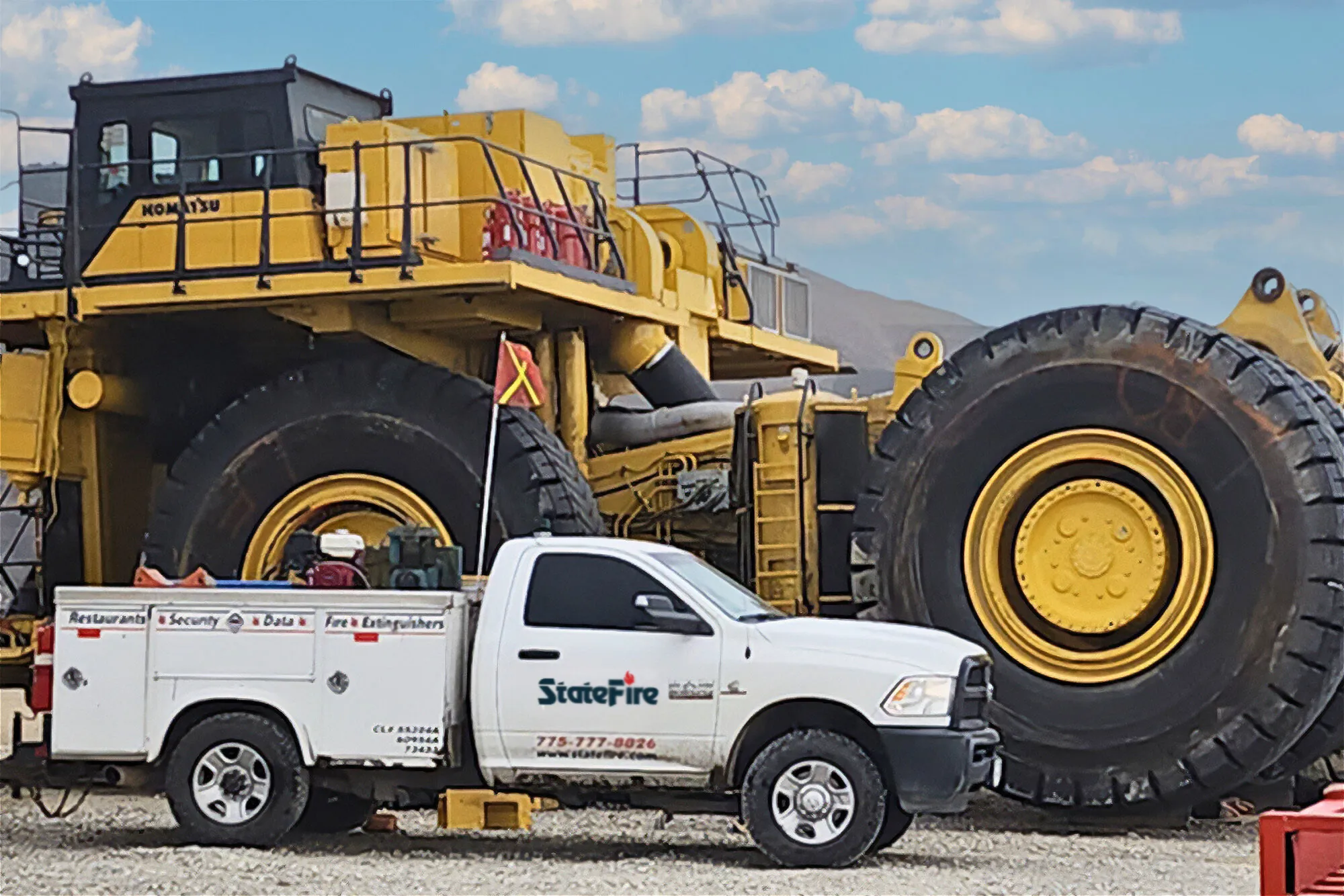
The right suppression system depends on your equipment type, fire risks, operating environment, compliance requirements, and maintenance needs. State Fire helps select and install systems based on the hazards present on each machine.
Dry Chemical Systems
Dry chemical systems are commonly used on heavy equipment because they provide fast flame knockdown for flammable liquid, fuel, oil, hydraulic, and engine compartment fires.
Best for: Fast knockdown of engine, fuel, oil, and Class B fire risks.
Common applications: Mining trucks, loaders, dozers, excavators, construction equipment, forestry equipment, and other off-road machinery.
Wet Chemical / Liquid Agent Systems
Wet chemical and liquid agent systems help cool hot surfaces and reduce the chance of re-ignition after the initial fire is suppressed. These systems are useful in high-heat areas where hot components can continue to create ignition risk.
Best for: Cooling hot surfaces and reducing re-ignition risk.
Common applications: Turbochargers, exhaust components, brake assemblies, hydraulic areas, and high-heat engine compartments.
Dual Agent Fire Suppression Systems
Dual agent systems combine dry chemical flame knockdown with liquid-agent cooling. They are often recommended for large, high-value, or high-risk equipment where both rapid suppression and re-ignition control are important.
Best for: Combining fast knockdown with cooling performance.
Common applications: Large mining equipment, draglines, shovels, haul trucks, and other critical high-value machines.
Clean Agent Systems for Electrical Enclosures
Clean agent systems are used where residue must be minimized, especially around sensitive electrical or electronic components.
Best for: Residue-free suppression for sensitive components.
Common applications: Electrical enclosures, control panels, battery compartments, electronics cabinets, and other sensitive equipment areas.
How Mobile Fire Suppression Systems Work
Detection
Detection components monitor high-risk zones for fire conditions. Depending on the system and equipment, detection may include linear heat detection, spot detectors, electronic sensors, or detection tubing routed through engine, hydraulic, electrical, and battery areas.
Activation
When the system detects fire conditions, it activates automatically to begin suppression. Most systems also include manual activation points in the operator cab and at ground level so operators or nearby personnel can activate the system if needed.
Suppression
Suppression agent discharges through engineered nozzles placed near the fire risk zones. The goal is to suppress the fire at the source quickly, limit equipment damage, and reduce the risk of operator injury.
Notification & Equipment Shutdown
Systems may include audible and visual alarms to notify the operator. Depending on the equipment and system design, shutdown options may also be integrated for engine, fuel, battery, or electrical systems.
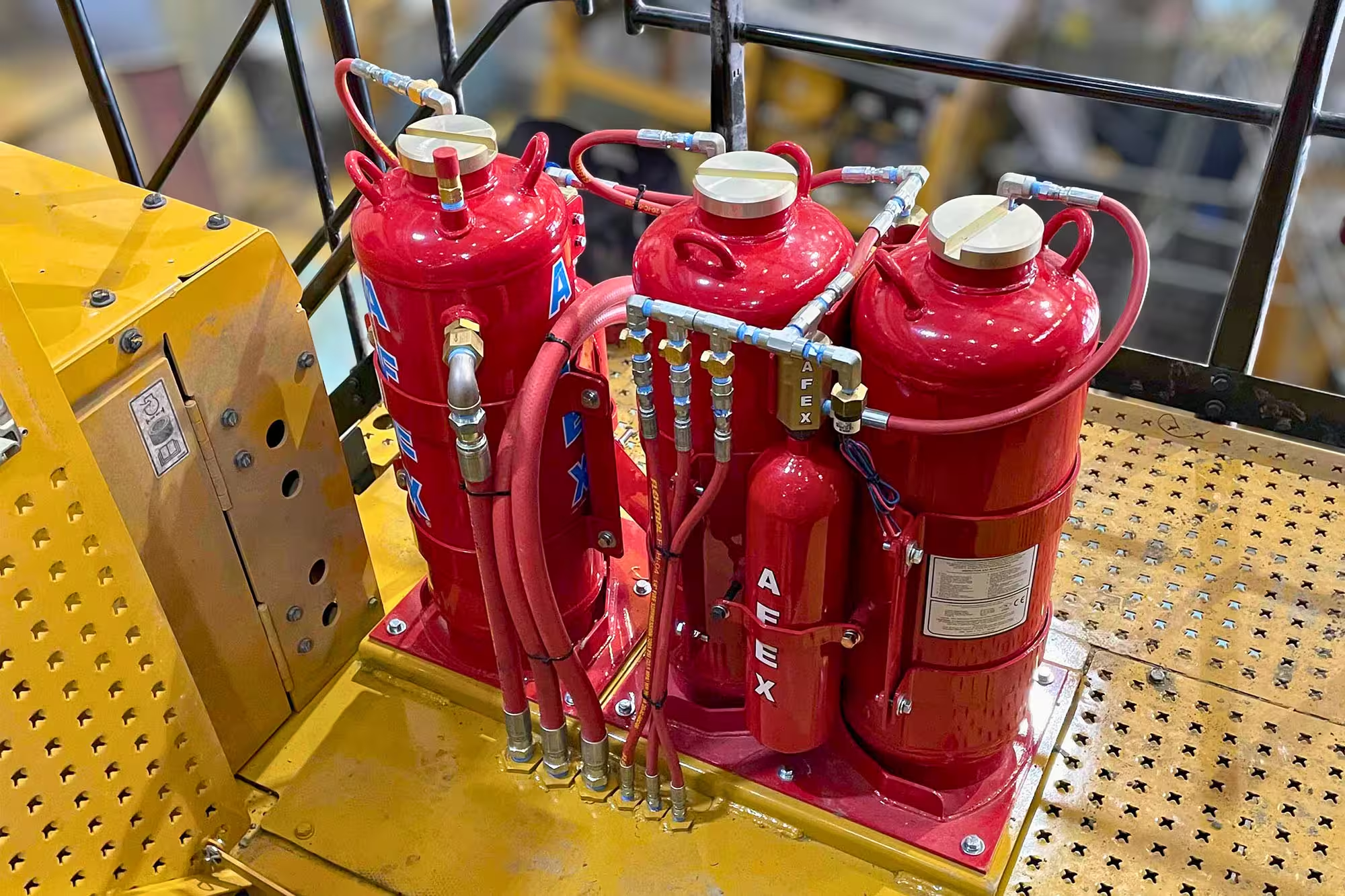
Common Equipment Fire Risk Zones
Mobile equipment fire suppression systems are engineered around the areas most likely to ignite or spread fire.
Common risk zones include:
- Engine compartments
- Turbochargers and exhaust components
- Hydraulic pumps, hoses, and reservoirs
- Fuel lines and fuel tanks
- Electrical panels and wiring
- Battery compartments
- Brake assemblies and hot surfaces
- Operator cab areas
- Debris collection points
- Enclosed control cabinets
State Fire evaluates these risk zones before installation so the system is designed around the actual equipment layout and hazard profile.
MSHA, NFPA & Manufacturer-Compliant Installation
State Fire installs and services mobile fire suppression systems to support applicable safety, regulatory, manufacturer, and site-specific requirements.
Common standards and requirements may include:
| Requirement | Applies To | Why It Matters |
|---|---|---|
| MSHA 30 CFR Part 75 | Underground mining equipment | Supports fire protection requirements for applicable underground mining operations |
| MSHA 30 CFR Part 77 | Surface mining equipment | Supports safety programs and fire protection expectations for surface mining operations |
| NFPA 17 | Dry chemical extinguishing systems | Provides guidance for dry chemical system design, installation, and maintenance |
| NFPA 17A | Wet chemical extinguishing systems | Provides guidance for wet chemical system design, installation, and maintenance |
| FM / UL Listed Equipment | Approved suppression components | Supports system reliability, documentation, and insurer confidence |
| OEM / Manufacturer Requirements | Equipment-specific installations | Helps preserve equipment integrity and manufacturer-approved installation practices |
Final requirements may vary by equipment type, application, mine operator, AHJ, insurer, manufacturer, and site safety program.
Authorized Mobile Suppression System Brands We Install
State Fire installs and services systems from trusted mobile and vehicle suppression manufacturers.
Authorized and supported brands include:

Related Heavy Equipment Protection Products
State Fire also supports complementary equipment protection solutions for harsh operating environments, including vehicle air filtration and precleaning systems that help protect engines and improve equipment reliability.

Inspection, Maintenance, Recharge & Repair Services
A mobile fire suppression system only protects your equipment if it is maintained and ready to activate. State Fire provides inspection, maintenance, recharge, and repair services to help keep your systems operational and compliant.
Our services include:
- Semi-annual and annual system inspections
- Pressure verification and gauge checks
- Detection tubing and sensor inspection
- Discharge nozzle and piping inspection
- Cylinder service coordination
- Hydrostatic testing coordination where required
- System recharge after discharge
- Fire suppression system reset
- Component replacement
- Detection repair and upgrades
- Compliance documentation for audits, safety programs, and insurance reviews
- 24/7 emergency response and post-activation support
Why Choose State Fire for Mobile Fire Suppression?
State Fire provides field-ready fire protection support for heavy equipment, vehicles, and mobile machinery operating in demanding environments.
Businesses choose State Fire for:
- Certified mobile suppression technicians
- Manufacturer-backed system installation and service
- Mining, forestry, construction, fleet, and industrial equipment experience
- On-site service at mine sites, job sites, fleet yards, and remote locations
- Custom system design for each machine’s fire risk zones
- Support for MSHA, NFPA, OEM, manufacturer, and site safety requirements
- Multi-site fleet service coordination
- Post-discharge recharge and emergency repair support
- Full lifecycle service from design and installation to inspection, recharge, and repair
Mobile Fire Suppression Services Near You
State Fire provides mobile equipment fire suppression design, installation, inspection, maintenance, recharge, and repair through regional offices and field service teams.
We support:
- Mine sites
- Construction fleets
- Forestry operations
- Transportation fleets
- Industrial facilities
- Agricultural operations
- Equipment dealers
- Service yards
- Remote jobsites
Whether you need a new system, a retrofit, a scheduled inspection, a post-discharge recharge, or emergency service, State Fire can help keep your equipment protected and ready for operation.

Mobile Fire Suppression FAQs
What is a mobile fire suppression system?
A mobile fire suppression system is an automatic fire detection and suppression system installed on heavy equipment, vehicles, or mobile machinery. It monitors high-risk areas and discharges suppression agent when fire conditions are detected.
What equipment needs mobile fire suppression?
Mobile fire suppression is commonly used on mining haul trucks, excavators, loaders, dozers, forestry harvesters, log skidders, refuse trucks, fleet vehicles, buses, generators, and high-value industrial or off-road equipment.
Are fire suppression systems required for mining equipment?
Certain mining equipment may require fire suppression depending on whether it is used underground, on the surface, or under a specific mine safety program. Requirements may involve MSHA, NFPA, manufacturer, insurer, and site-specific standards.
How often should mobile fire suppression systems be inspected?
Most systems require routine inspections based on manufacturer recommendations, applicable standards, and site requirements. Many heavy equipment systems are inspected semi-annually or annually, with more frequent checks in harsh operating environments.
What happens after a system discharges?
After discharge, the system should be inspected, recharged or reset, and verified by a qualified technician before the equipment returns to service. Damaged detection components, nozzles, cylinders, hoses, or valves may need repair or replacement.
What suppression agents does State Fire install?
State Fire installs dry chemical, wet chemical, dual agent, and clean agent systems depending on the equipment type, fire hazard, operating environment, and compliance requirements.
Request Your Vehicle Suppression System
Protect your operators, equipment, and uptime with a mobile fire suppression system designed for your specific application.
State Fire can help assess your equipment, recommend the right suppression system, install approved components, and provide ongoing inspection, recharge, and repair support.
Contact State Fire to request mobile fire suppression service.