Professional Kitchen Hood Cleaning Services in Utah
Grease buildup inside a commercial kitchen exhaust system is one of the most serious fire hazards in a restaurant. When grease collects inside the hood, filters, ductwork, plenum, and rooftop exhaust fan, a small flare-up can quickly spread through the entire kitchen exhaust system.
State Fire provides professional kitchen hood cleaning services in Utah for restaurants, hotels, schools, healthcare facilities, senior living communities, commercial kitchens, and multi-location food service operations. Our technicians clean accessible exhaust system components from hood to fan, help support NFPA 96 compliance, and provide documentation for fire marshal inspections, insurance records, and facility audits.
Whether you operate a high-volume restaurant in Salt Lake City, a resort kitchen in Park City, a university cafeteria in Provo, or a commercial kitchen in St. George, State Fire helps keep your exhaust system cleaner, safer, and inspection-ready.
Utah Commercial Kitchen Hood Cleaning for Safer, Cleaner Kitchens
Professional kitchen hood cleaning is more than surface-level stainless steel polishing. A compliant cleaning service must address grease buildup throughout the exhaust path, including the hood, filters, accessible ductwork, fan, and grease collection areas.
State Fire helps Utah commercial kitchens reduce fire risk, improve exhaust performance, and maintain the documentation required by fire marshals, AHJs, insurance carriers, and facility managers.
Our kitchen exhaust cleaning services help with:
- Grease fire prevention
- NFPA 96 hood cleaning compliance
- Fire marshal inspection readiness
- Cleaner and more efficient exhaust airflow
- Reduced smoke, heat, and odor buildup
- Insurance and facility documentation
- Long-term kitchen exhaust system maintenance
What's Included in Every Hood Cleaning
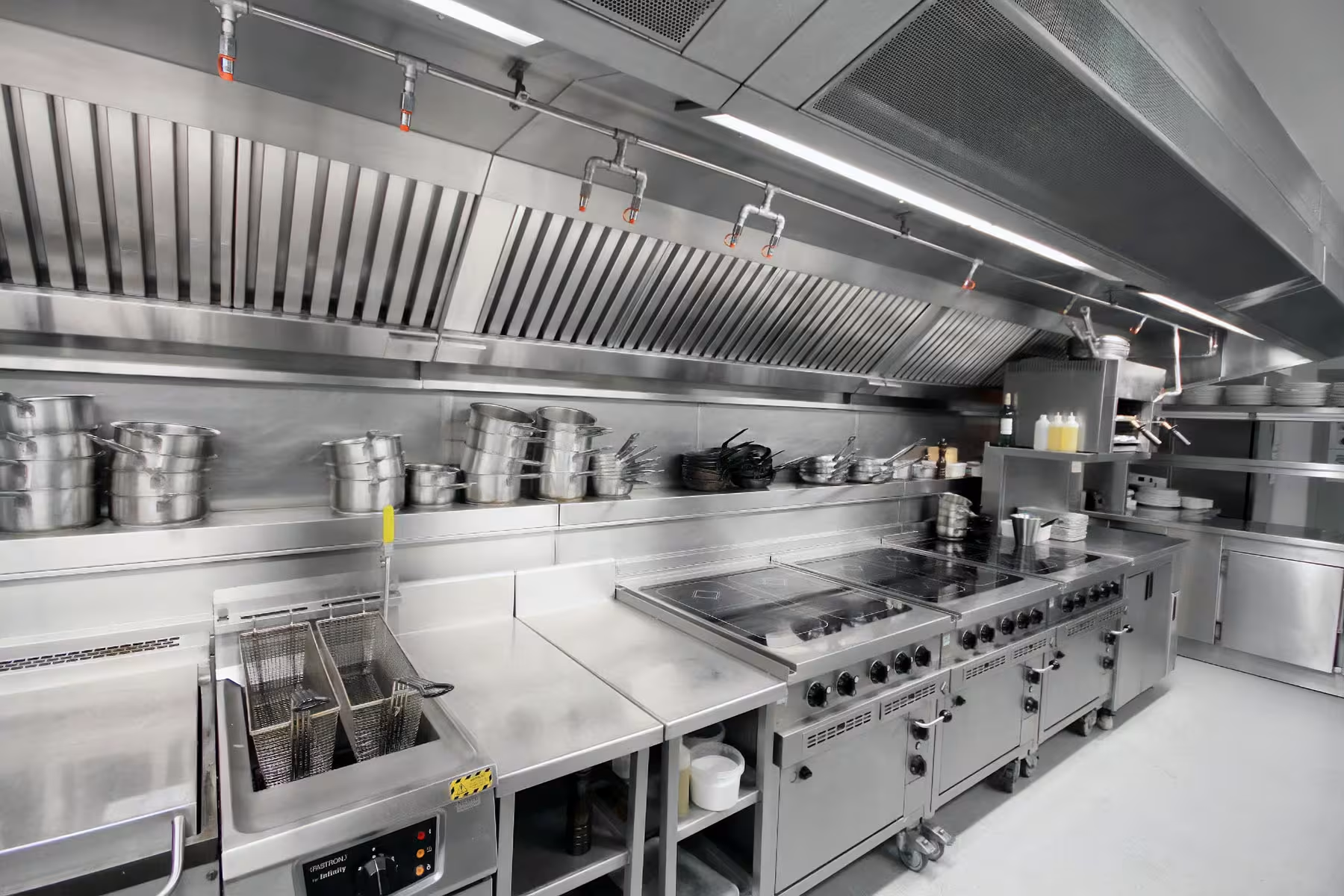
Our hood cleaning service covers the complete exhaust system, hood to fan:
- Hood interior and exterior — degreasing, scraping, and cleaning of all accessible hood surfaces
- Grease filter cleaning or replacement — removal, cleaning, and reinstallation of baffle filters (replacement available)
- Interior ductwork degreasing — scraping and chemical cleaning of accessible duct surfaces from hood to fan
- Exhaust fan cleaning and inspection — rooftop or wall-mount fan housing, blades, and motor compartment cleaning
- Grease trap and collection area cleaning — removal of grease collection cups, drain pans, and accumulation
- Stainless steel polishing — final polish of all visible stainless surfaces
- Wastewater removal and site cleanup — full cleanup of the work area with proper grease waste disposal
- Access panel installation — if missing access panels prevent full cleaning, we install code-compliant access doors
- Compliance documentation — written service report and certificate of performance posted near your hood
Every cleaning is performed to NFPA 96 standards and Utah AHJ requirements.
Restaurants & Commercial Kitchens We Serve
State Fire provides commercial kitchen hood cleaning for a wide range of Utah facilities, including:
- Independent restaurants and restaurant groups
- Hotel, resort, and hospitality kitchens
- Healthcare and hospital food service kitchens
- School, university, and campus cafeterias
- Senior living and assisted care facilities
- Corporate dining and catering kitchens
- Entertainment venues and event kitchens
- Church and religious institution kitchens
- 24-hour operations and high-volume cooking facilities
- Commercial kitchens with charbroilers, fryers, ranges, griddles, or solid fuel cooking equipment
Complete Hood-to-Fan Exhaust System Cleaning
A proper hood cleaning service should address the entire accessible kitchen exhaust system — not just the visible hood surfaces. State Fire performs hood-to-fan cleaning to help remove grease accumulation where fire risk is highest.
Hood Interior & Exterior Cleaning
We degrease, scrape, clean, and polish accessible hood surfaces to remove grease buildup and improve the appearance and safety of your cooking line.
Grease Filter Cleaning & Replacement
Baffle filters are removed, cleaned, and reinstalled. If filters are missing, damaged, or worn out, replacement options are available.
Grease Duct & Plenum Cleaning
Accessible ductwork and plenum areas are scraped and chemically cleaned to reduce grease buildup inside the exhaust path.
Rooftop Exhaust Fan Cleaning
Rooftop and wall-mounted exhaust fans are cleaned, including accessible fan housing, blades, motor-area surfaces, and surrounding discharge areas where grease can collect.
Grease Collection & Rooftop Cleanup
Grease cups, drain pans, collection areas, and nearby rooftop surfaces are cleaned to help prevent grease pooling and roof contamination.
Access Panel Installation
If your exhaust ductwork does not have proper access points, State Fire can install code-compliant access panels to improve cleanability and support ongoing service requirements.
Documentation for Fire Marshal & Insurance Records
After cleaning, State Fire provides service documentation to support fire marshal inspections, insurance reviews, and facility maintenance records.
Why Kitchen Hood Cleaning Is Required in Utah
Utah commercial kitchens are expected to maintain clean kitchen exhaust systems in accordance with adopted fire codes, NFPA 96 standards, and local AHJ requirements. Fire marshals may review hood cleaning records during inspections and may require corrective action when grease buildup is visible or documentation is missing.
Inadequate hood cleaning can lead to:
- Increased fire risk from grease ignition
- Failed fire marshal inspections
- Reinspection fees or code violations
- Fines or potential kitchen shutdowns
- Insurance complications after a grease fire
- Reduced exhaust efficiency
- Excess heat, smoke, odor, and poor kitchen air quality
Routine professional kitchen exhaust cleaning helps reduce these risks while keeping your operation safer and more compliant.
NFPA 96 Hood Cleaning Frequency Requirements
NFPA 96 cleaning frequency is based on cooking volume, fuel type, grease production, and actual system conditions. Local Utah fire marshals may require more frequent cleaning depending on your kitchen and inspection results.
| Cooking Volume | Cleaning Frequency |
|---|---|
| Solid fuel cooking, wood, charcoal, or pellet systems | Monthly |
| High-volume cooking, 24-hour operations, charbroiling, or wok cooking | Quarterly |
| Moderate-volume full-service restaurants | Semi-annually |
| Low-volume kitchens, churches, seasonal kitchens, or day camps | Annually |
State Fire can help evaluate your kitchen and recommend a cleaning schedule that fits your operation, cooking equipment, and compliance requirements.
How State Fire’s Hood Cleaning Process Works
Step 1: Pre-Service Setup
Technicians arrive during your scheduled service window, often after hours or overnight. Cooking equipment is covered, the work area is prepared, and the system is set up for safe cleaning.
Step 2: System Access & Disassembly
Grease filters are removed, access panels are opened, and technicians gain access to the hood, plenum, ductwork, and exhaust fan where possible.
Step 3: Degreasing, Scraping & Cleaning
Heavy grease deposits are scraped from accessible surfaces, then treated with degreasing solutions to remove remaining buildup throughout the hood and exhaust path.
Step 4: Rooftop Fan & Grease Collection Cleaning
The exhaust fan, blades, housing, grease cups, drain pans, and discharge areas are cleaned to reduce grease accumulation around rooftop or wall-mounted equipment.
Step 5: Reassembly, Polish & Site Cleanup
Filters and access panels are reinstalled, visible stainless steel surfaces are polished, grease waste is collected, and the kitchen work area is cleaned.
Step 6: Service Report & Certificate
State Fire provides service documentation, including a written cleaning report and certificate of performance for your records.
After-Hours & Overnight Hood Cleaning Across Utah
Kitchen hood cleaning usually requires the cooking line to be shut down, which is why State Fire offers flexible scheduling for Utah restaurants and commercial kitchens. We can schedule service overnight, on weekends, before opening, or during other off-hours to help minimize disruption.
For restaurant groups and multi-location operators, State Fire can help coordinate recurring cleaning schedules across multiple Utah locations.
Why Choose State Fire for Utah Hood Cleaning
State Fire brings fire protection expertise, local code knowledge, and commercial kitchen experience together in one service partner.
Choose State Fire for:
- Professional kitchen hood cleaning across Utah
- Hood-to-fan exhaust system cleaning
- NFPA 96 cleaning support
- After-hours, overnight, and weekend scheduling
- Documentation for fire marshal and insurance records
- Access panel installation when required
- Multi-location service coordination
- Integration with kitchen fire suppression, fire extinguishers, and other restaurant fire protection services
- Local service from a fire protection company that understands Utah AHJ expectations
Utah Hood Cleaning Service Areas
State Fire provides commercial kitchen hood cleaning throughout Utah, including:
Salt Lake County: Salt Lake City, Sandy, Murray, West Valley City, West Jordan, Draper, Cottonwood Heights
Utah County: Provo, Orem, Lehi, American Fork, Spanish Fork, Pleasant Grove
Davis County: Bountiful, Layton, Kaysville, Farmington
Weber County: Ogden, Roy, Clearfield
Summit County: Park City, Heber City
Cache County: Logan
Washington County: St. George, Hurricane, Cedar City
Carbon County: Price, Wellington

Kitchen Hood Cleaning FAQs
How often should Utah restaurants have their hoods cleaned?
Cleaning frequency depends on cooking volume, fuel type, grease production, and fire marshal requirements. NFPA 96 commonly recommends monthly cleaning for solid fuel cooking, quarterly for high-volume kitchens, semi-annual cleaning for moderate-volume restaurants, and annual cleaning for low-volume kitchens.
Is commercial kitchen hood cleaning required by law in Utah?
Yes. Commercial kitchens are expected to maintain clean kitchen exhaust systems under adopted fire codes, NFPA 96 standards, local AHJ requirements, and insurance expectations.
What parts of the exhaust system are cleaned?
A complete service includes accessible hood surfaces, grease filters, plenum areas, ductwork, exhaust fan housing and blades, grease collection components, and discharge areas.
Can hood cleaning be done during business hours?
Most hood cleaning requires the cooking line or kitchen area to be shut down. State Fire commonly schedules service overnight, before opening, on closure days, or during other off-hours.
Do I receive documentation after service?
Yes. State Fire provides a written service report and certificate of performance to support fire marshal inspections, insurance records, and internal facility documentation.
What if my hood system does not have proper access panels?
If access is limited, State Fire can evaluate the system and install access panels where needed to improve cleanability and support compliance.
Does hood cleaning include the rooftop exhaust fan?
Yes. A proper hood-to-fan cleaning includes the rooftop or wall-mounted exhaust fan, including accessible fan housing, blades, grease collection areas, and surrounding discharge surfaces.
Does State Fire offer hood cleaning outside Utah?
At this time, kitchen hood cleaning is available in Utah. State Fire provides other restaurant fire protection services across its broader service areas.
Schedule Professional Kitchen Hood Cleaning
Keep your kitchen safer, cleaner, and inspection-ready with professional kitchen hood cleaning from State Fire. Contact our team to schedule service, request a quote, or set up a recurring NFPA 96 cleaning schedule for your Utah restaurant or commercial kitchen.