
Commercial Fire Extinguisher Services
State Fire provides complete commercial fire extinguisher services for businesses, industrial facilities, property managers, contractors, restaurants, schools, healthcare facilities, warehouses, and multi-site organizations. From annual inspections and recharge services to hydrostatic testing, replacement, installation, and employee training, our certified technicians help keep your facility protected, compliant, and ready for inspection.
Whether you need a single extinguisher serviced or a full fire extinguisher program across multiple locations, State Fire can help you maintain the right equipment, documentation, and code-compliant coverage for your building.
Complete Fire Extinguisher Services for Commercial Facilities
Fire extinguishers are one of the most important first-response tools in a commercial fire protection plan. But to be effective, they need to be the correct type, properly placed, fully charged, regularly inspected, and maintained according to applicable fire code requirements.
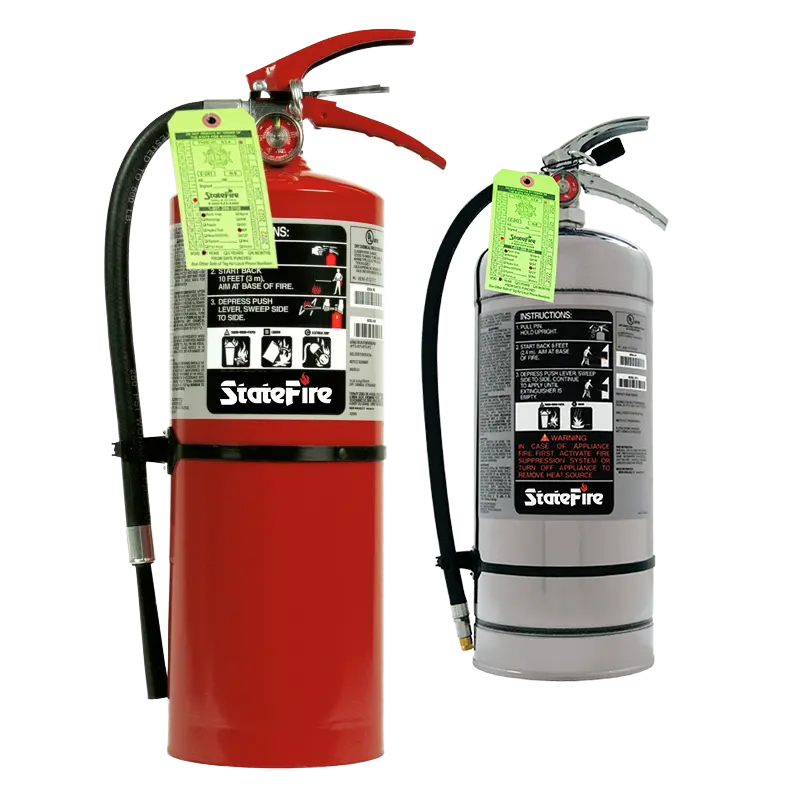
State Fire provides full-service support for portable fire extinguishers, including:
- Fire extinguisher inspections
- Fire extinguisher recharge and refill
- Hydrostatic testing
- 6-year maintenance
- Fire extinguisher repair
- Replacement extinguishers
- New extinguisher sales
- Code-compliant installation and mounting
- Commercial kitchen Class K extinguishers
- Specialty extinguishers for industrial hazards
- Employee fire extinguisher training
- Inspection tags and compliance documentation
Our team helps businesses stay prepared for fire marshal inspections, AHJ requirements, insurance reviews, OSHA compliance needs, and routine facility safety audits.
Fire Extinguisher Inspection, Testing & Maintenance
Routine fire extinguisher maintenance helps confirm that your extinguishers are accessible, properly charged, damage-free, and ready to use in an emergency.
Annual Fire Extinguisher Inspections
Commercial fire extinguishers typically require a professional inspection at least once per year. During service, State Fire technicians check the condition, accessibility, pressure, labeling, mounting, safety seals, hoses, nozzles, and overall readiness of each extinguisher.
After inspection, we provide updated tags and documentation to help support compliance with applicable fire safety requirements.
Fire Extinguisher Recharge & Refill Services
If a fire extinguisher has been used, partially discharged, lost pressure, or failed inspection, it may need to be recharged. State Fire provides fire extinguisher recharge services to restore properly serviceable extinguishers to working condition.
Recharge service may be needed after:
- Any discharge, even partial use
- Low pressure readings
- Failed inspection
- Accidental discharge
- Routine maintenance
- Fire extinguisher training events
Hydrostatic Testing & 6-Year Maintenance
Certain fire extinguishers require periodic internal maintenance and hydrostatic testing to verify cylinder integrity and safe operation. State Fire provides testing and maintenance services to help determine whether an extinguisher can remain in service or should be replaced.
Hydrostatic testing is especially important for pressurized cylinders that may be exposed to corrosion, impact, age, harsh environments, or heavy commercial use.
Fire Extinguisher Sales, Installation & Code-Compliant Placement
Choosing the right fire extinguishers is not just about buying equipment. Commercial facilities need the correct extinguisher type, size, rating, placement, signage, and accessibility for the hazards present in the building.
State Fire can help with new extinguisher sales and installation for:
- New construction projects
- Tenant improvements
- Commercial kitchens
- Warehouses and distribution centers
- Offices and retail spaces
- Industrial facilities
- Schools and healthcare buildings
- Multi-family and mixed-use properties
- Fleet, vehicle, and equipment applications
- Multi-location businesses
Our technicians can help evaluate your facility layout and recommend extinguishers based on hazard type, occupancy, travel distance, accessibility, and code requirements.
Choosing the Right Fire Extinguisher for Your Facility
Different environments require different types of fire extinguishers. A warehouse, restaurant kitchen, data room, machine shop, and office space may all have different fire risks.
State Fire helps businesses select extinguishers for common hazard types, including:
- Ordinary combustibles
- Flammable liquids
- Electrical equipment
- Commercial cooking oils and fats
- Combustible metals
- Sensitive electronics
- Industrial and vehicle hazards
Commercial Fire Extinguisher Classes & Ratings
Commercial buildings may require one or more extinguisher types depending on the fire hazards present. Common extinguisher classes include:
Class A: Ordinary combustibles such as wood, paper, cardboard, and cloth
Class B: Flammable liquids such as fuel, oil, solvents, and paint
Class C: Energized electrical equipment
Class D: Combustible metals used in certain industrial environments
Class K: Commercial cooking oils and fats
Many facilities use multipurpose ABC fire extinguishers, while commercial kitchens often require Class K extinguishers near cooking equipment. Industrial and special hazard environments may require more specialized units.
Temporary Replacement Units During Service
When extinguishers are removed for recharge, maintenance, repair, or hydrostatic testing, your facility may still need equivalent protection. State Fire can help maintain coverage with properly rated replacement units where applicable, reducing service interruptions and helping your business stay protected.
Fire Extinguisher Services for Every Industry
State Fire supports fire extinguisher compliance and maintenance for a wide range of commercial and industrial environments, including:
- Restaurants and commercial kitchens
- Office buildings
- Retail stores
- Warehouses
- Manufacturing facilities
- Schools and universities
- Healthcare facilities
- Apartment and multi-family properties
- Hotels and hospitality facilities
- Industrial plants
- Mining and heavy equipment operations
- Fleet and transportation businesses
- Government and municipal buildings
- Multi-site commercial accounts
Our team can coordinate recurring fire extinguisher inspections and service programs for businesses with one location or many.
When to Replace a Fire Extinguisher
Not every fire extinguisher should be recharged or repaired. In some cases, replacement is the safer or more cost-effective option.
A fire extinguisher may need to be replaced if it has:
- Severe rust or corrosion
- Dents, cracks, or cylinder damage
- A damaged hose, nozzle, gauge, or handle
- A missing safety pin or tamper seal
- Failed hydrostatic testing
- Lost pressure repeatedly
- Obsolete parts or non-serviceable components
- Reached the end of its serviceable life
- Been exposed to harsh industrial or outdoor conditions
State Fire technicians can inspect your equipment and recommend whether recharge, repair, testing, or replacement is the best option.

Fire Extinguisher Training for Employees
Fire extinguishers are most effective when employees know when and how to use them safely. State Fire offers fire extinguisher training to help teams understand basic extinguisher use, fire classes, safety procedures, and when evacuation is the better option.
Training can be especially valuable for:
- Facility maintenance teams
- Restaurant and kitchen staff
- Industrial employees
- Warehouse teams
- School and healthcare personnel
- Safety managers
- Property management teams
Employee fire extinguisher training can support workplace safety, emergency preparedness, and OSHA-related safety programs.
Fire Extinguisher Industry Affiliations
State Fire works with major fire extinguisher manufacturers. We help customers choose the right extinguisher type and rating for their facility. View our trusted manufacturers below.


Commercial Fire Extinguisher Service Near You
State Fire provides commercial fire extinguisher services through regional teams that support businesses across State Fire service areas. Whether you need annual inspections, extinguisher recharge, replacement units, testing, or multi-location service coordination, our team can help you keep your facility compliant and protected.
For businesses with multiple buildings or locations, State Fire can help standardize service schedules, inspection documentation, equipment replacement, and ongoing fire protection support.
Contact State Fire to schedule commercial fire extinguisher service or request a quote.
Frequently Asked Questions
How often do commercial fire extinguishers need to be inspected?
Commercial fire extinguishers typically need a professional inspection once per year, along with routine visual checks by the facility. State Fire provides annual fire extinguisher inspections, updated service tags, and documentation for compliance records.
Do fire extinguishers expire?
Fire extinguishers do not all expire on the same date, but they do require ongoing inspection, maintenance, and testing. Age, condition, cylinder type, pressure, corrosion, and testing history all affect whether an extinguisher can remain in service.
When should a fire extinguisher be replaced instead of recharged?
A fire extinguisher may need replacement if it is damaged, corroded, obsolete, non-rechargeable, repeatedly losing pressure, or unable to pass required testing. State Fire can inspect the extinguisher and recommend the best option.
How many fire extinguishers does my business need?
The number of fire extinguishers your business needs depends on building size, layout, occupancy type, fire hazards, extinguisher rating, and travel-distance requirements. State Fire can help evaluate your facility and recommend code-compliant placement.
Do restaurants need Class K fire extinguishers?
Commercial kitchens commonly require Class K fire extinguishers because they are designed for fires involving cooking oils and fats. Restaurants may also need other extinguisher types in dining areas, storage spaces, mechanical rooms, and electrical areas.